THE QUICK ANSWER
Pressure washing and soft washing are not competing names for the same process. Controlled pressure is appropriate for suitable hard surfaces such as sound concrete, while soft washing uses a suitable cleaning solution and low-pressure application for qualifying siding, painted finishes, stucco, and roofing materials that can be damaged by aggressive spraying. A professional may use both methods during one visit because the driveway and the house are different materials. The right question is not “Which method is stronger?” It is “Which method safely matches each surface and the problem we are trying to remove?”
What homeowners should know
- Suitable concrete can often be cleaned with controlled pressure and even surface-cleaner passes.
- Qualifying siding, painted surfaces, stucco, and asphalt shingles generally need a lower-pressure approach.
- More pressure is not automatically more professional or more effective.
- Oxidation, loose paint, damaged siding, leaks, and failed caulk are conditions cleaning cannot repair.
- One property may need several methods, with the process changing as the material changes.
What pressure washing actually means
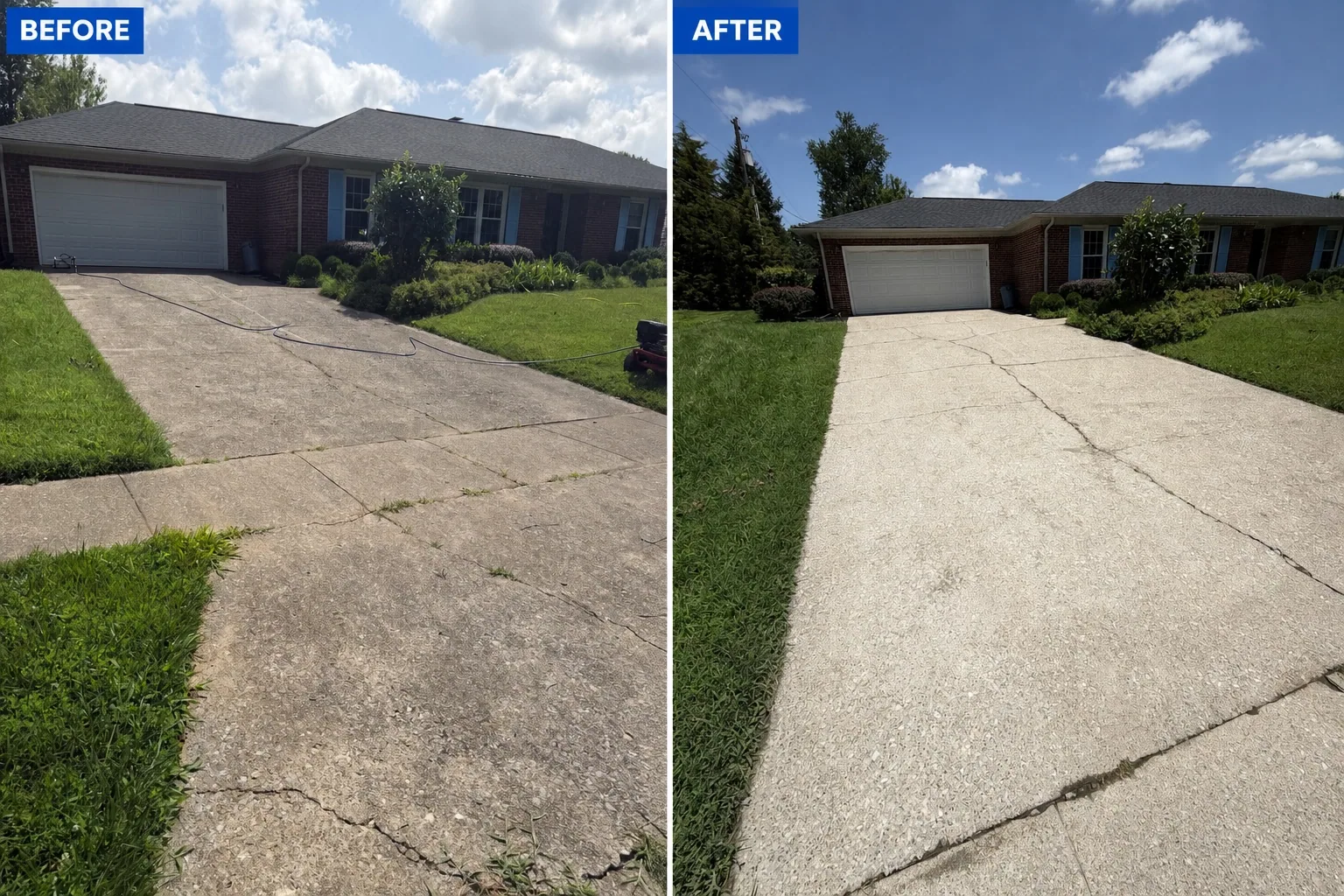
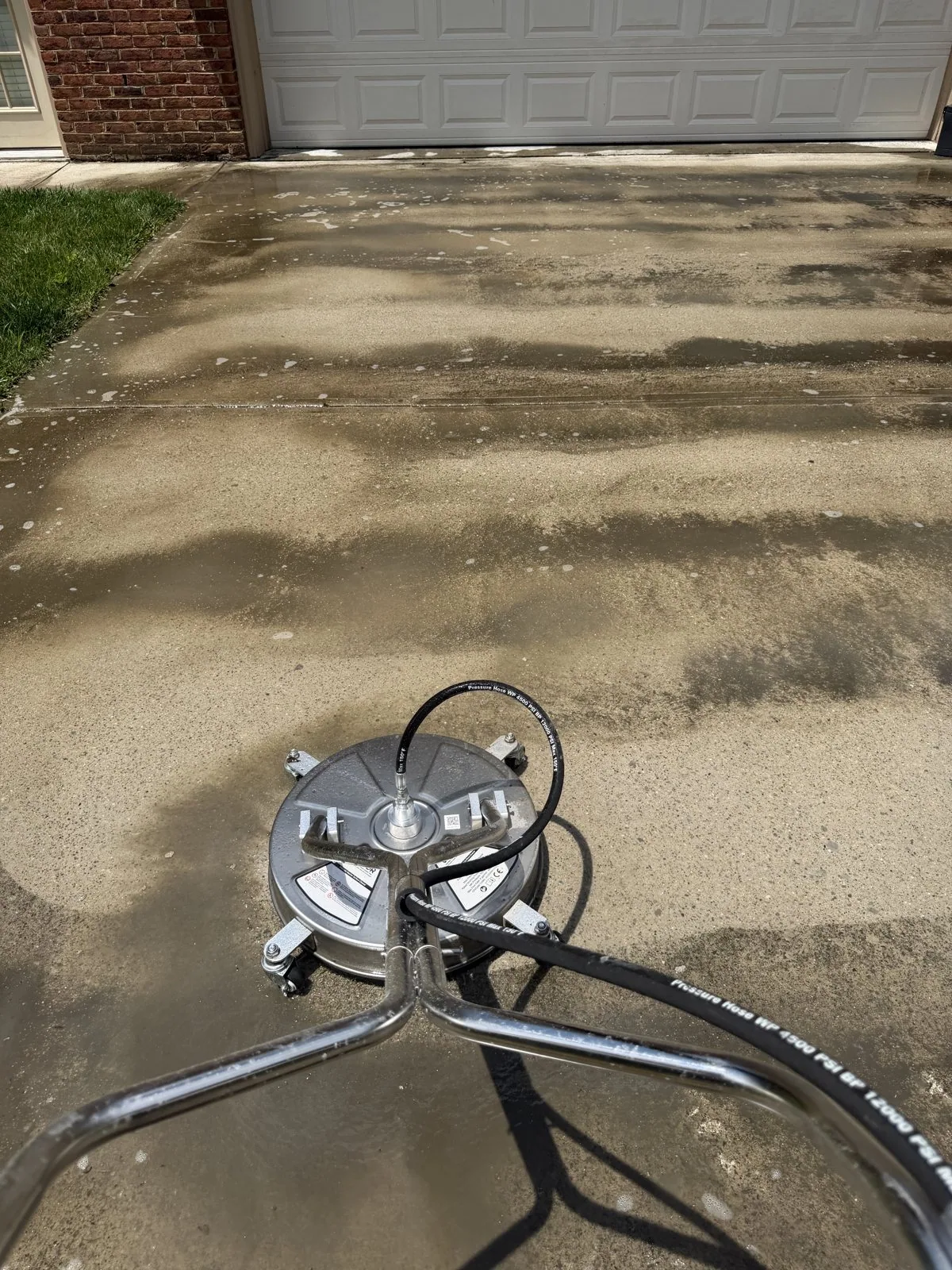
Pressure washing uses pressurized water to loosen and move material from an approved surface. On sound concrete, the technician may combine pretreatment, a surface cleaner, controlled wand work at edges, and a final rinse. The machine is only one part of the job. Nozzle choice, distance, movement, water flow, surface condition, and the operator's judgment all affect the result.
Suitable hard surfaces can tolerate more mechanical cleaning than siding or shingles, but even concrete has limits. Existing cracks, spalling, weak joints, previous coatings, and deeply absorbed stains remain important. Fresh or damaged concrete may require a different plan. A company should inspect the surface instead of treating every driveway as identical.
What soft washing means
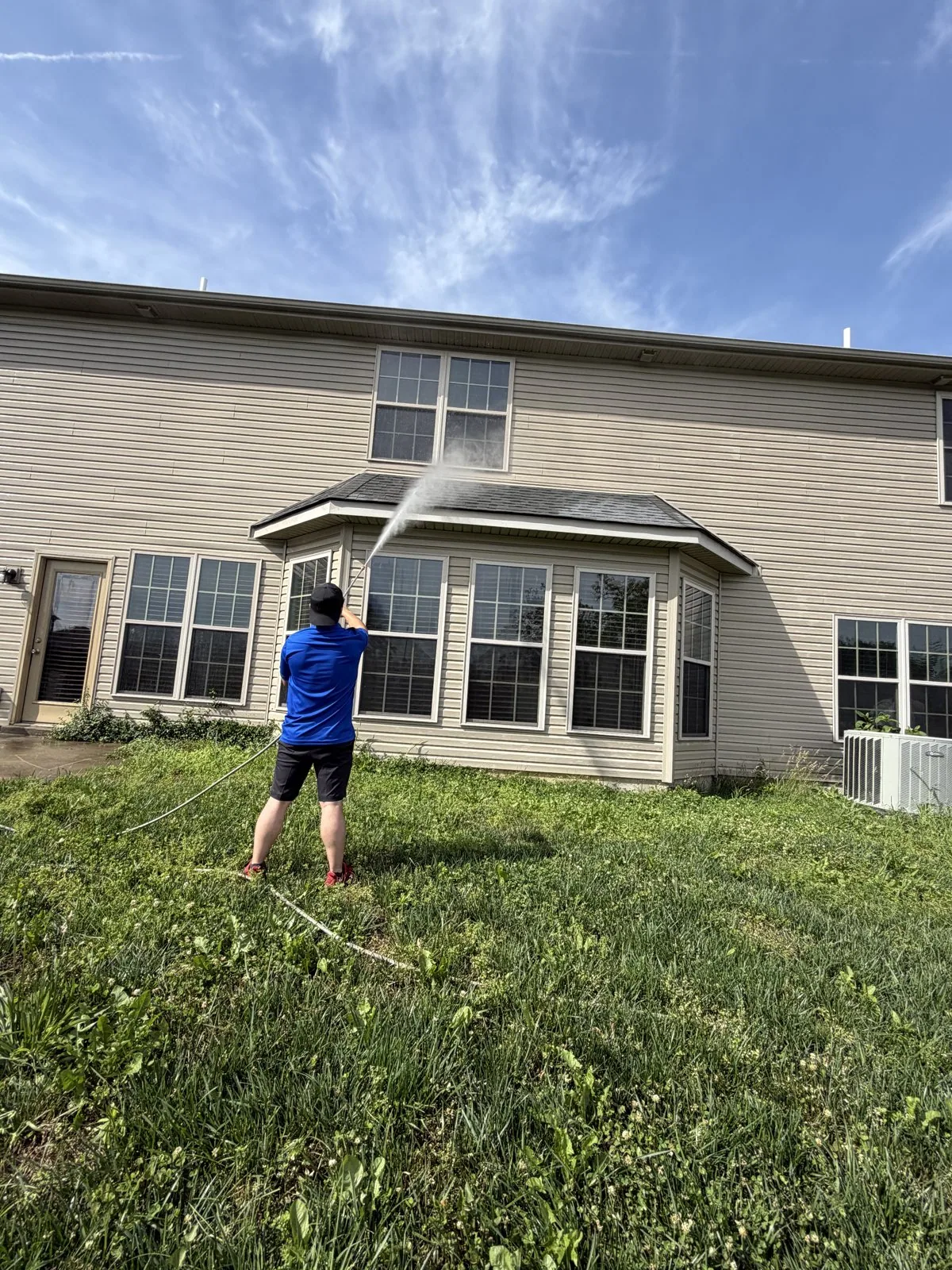
Soft washing relies on a suitable cleaning solution, dwell time, and a low-pressure application and rinse. The solution does the majority of the cleaning work, so the technician does not need to force water behind siding or strike a delicate finish with excessive pressure. The exact chemistry and process should be selected for the material, the buildup, weather, surrounding property, and manufacturer guidance.
Soft washing is commonly considered for vinyl siding, painted surfaces, stucco, and qualifying roof materials. That does not mean every soft wash is automatically safe. The crew still needs to review failing paint, oxidation, open seams, loose siding, damaged caulk, electrical components, sensitive landscaping, runoff, and access. Lower pressure reduces one category of risk; it does not replace preparation and judgment.
Where each method usually belongs
A simple material map can help homeowners understand the conversation, although the property still needs to be reviewed before work begins.
- Driveways, sidewalks, and approved concrete patios: often controlled pressure with a surface cleaner and edge work.
- Vinyl siding and many qualifying exterior finishes: usually a lower-pressure house-washing process.
- Painted wood, stucco, and delicate or aging surfaces: condition-specific review with conservative pressure and realistic expectations.
- Asphalt shingles: non-pressure roof treatment only when the roof, access, drainage, and surroundings qualify.
- Decks and wood surfaces: material, age, coatings, fasteners, and the next finishing step determine the process; aggressive pressure can scar wood.
- Brick and masonry: mortar condition, age, staining, and water entry points need review before a method is selected.
Why the wrong pressure can cause damage
Water under high pressure can etch concrete, raise wood grain, strip coatings, mark siding, damage screens, loosen mortar, or drive water into openings. Damage is not proof that pressure washing is always wrong. It is proof that the method, material, condition, and operator matter. The same tool can be useful on one surface and inappropriate a few feet away.
Homeowners should be cautious of a plan that sounds like “we turn the machine up until it looks clean.” A better explanation identifies where pressure will be used, where it will not be used, and what pretreatment allows the crew to clean without unnecessary force. Ask how the process changes at siding, painted trim, windows, vents, doors, wood, and roof edges.
What a careful house-washing visit looks like
The visit starts before solution reaches the wall. The crew reviews the scope, notes loose or damaged areas, confirms that windows and doors are closed, identifies sensitive items, and plans access. Homeowners should move cushions, decorations, grills, and fragile objects away from the house and point out known leaks, failing caulk, loose siding, or previous repairs.
During cleaning, the technician works by section, controls application and dwell time, monitors runoff, and rinses the surface and surrounding areas as appropriate. Afterward, the crew reviews the approved scope and any conditions that remain. Oxidation, faded material, failing paint, and permanent staining can become more visible after ordinary buildup is removed; cleaning is not repainting or repair.
Arorix explains its current house soft-washing process and starting price on the service page so you can review the basics before requesting a quote.

How to choose a company without memorizing the science
You do not need to tell the contractor which nozzle or solution to use. You should expect a clear reason for the proposed method. Ask what the crew sees on the property, what it plans to use on each surface, what should be moved, how nearby landscaping and fixtures are handled, and which results cannot be guaranteed.
Useful answers sound specific to your home. Vague claims such as “our process is safe for everything” or “we can remove every stain” are not helpful. Different materials and conditions create different limitations. A good estimate makes those limits visible before the work, not after a problem appears.
- What method will you use on the driveway, siding, wood, and roof—and why?
- How will you protect windows, fixtures, landscaping, pets, vehicles, and neighboring property?
- What pre-existing damage or wear should we document before cleaning?
- Which stains or discoloration may remain after the standard service?
- Is the business insured, and who should I contact if I have a concern?
The bottom line
Choose the method by material and condition, not by the loudest machine or the simplest slogan. Controlled pressure is valuable on appropriate hard surfaces. Soft washing gives qualifying exterior finishes and roofs a lower-pressure path. The strongest plan may use both methods in one visit, with clear boundaries between them. When the crew can explain those boundaries in plain English, the homeowner can make an informed decision and know what to expect.
COMMON QUESTIONS
Answers before you schedule
Is soft washing the same as using low pressure?
Low pressure is an important part of soft washing, but the process also relies on a suitable cleaning solution, dwell time, controlled application, and rinsing. The method should be selected for the material and surrounding property.
Can you soft wash a driveway?
Pretreatment can be part of concrete cleaning, but sound concrete often also receives controlled mechanical cleaning such as surface-cleaner passes. The exact process depends on condition, stains, coatings, and age.
Will a house wash remove oxidation?
A standard house wash removes qualifying surface buildup; it is not an oxidation-restoration service. Oxidized siding or failing finishes can look uneven after cleaning and should be identified before work starts.
Can pressure washing damage vinyl siding?
Excessive or poorly directed pressure can mark siding or force water into openings. That is why qualifying siding is generally cleaned with a lower-pressure process and the crew reviews seams, damage, fixtures, windows, and doors.
Does Arorix pressure wash roofs?
No. Arorix does not pressure wash asphalt shingles. Qualifying roof work uses a non-pressure treatment only after the roof, access, drainage, and surrounding property are reviewed.